Advancing Creative Physical Computing Education: Designing, Sharing, and Taxonomizing Instructional Interventions
Daragh Byrne, Kayla Desportes, Noura Howell, Marti Louw, Sarah Sterman, Cesar Torres
Abstract
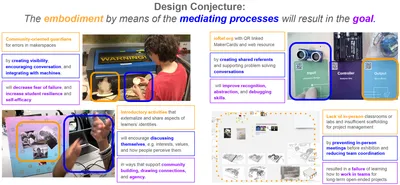
Physical computing is a materially rich practice that connects across skills in STEM, design, arts, and creativity. It also offers learners a means of making personally meaningful, computational artifacts that support creative development, resonate with personal identities, and access a history of craft and culture. Yet, physical computing instruction remains a complex instructional practice that requires navigating computation and reasoning, engineering and mechanisms, and creativity and problem-solving between physical and virtual spaces. Spurred by the pandemic, the shift to remote instruction fostered a wave of creativity in physical computing instruction and new lines of inquiry around access and inclusion, resilient learning, and the creativity, craft, and culture found in physical computing. This one-day workshop will convene a network of researchers, educators, and designers to uncover, share and reflect on our creative instructional responses. We will develop a set of agendas for continued innovation and inquiry in creative physical computing education in post-secondary contexts. Our aim is to cross-pollinate research agendas and strengthen educational approaches in critical STEM and design practices.
More by these authors