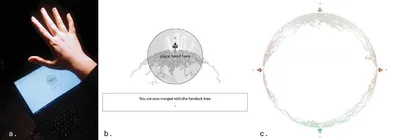
Tsuga Convictio: Visualizing for the ecological, feminine, and embodied
Molly Steenson, Daragh Byrne, Cathryn Ploehn
Abstract
A good data visualization opens up space for good conversations. That is, a data visualization is a starting point in a discussion of a shared understanding of the world, a way for us to know together. Consequently, our practices as data visualization designers-through collecting data and portraying them visually-create (or reinforce) ways we can understand the world, and thus move through it-it's ontological. Alarmingly, there is an emerging sense among new media artists and scholars that our practices of collecting and visualizing data can create rigid, harmful understandings of the world; ontologies of control. In particular, D'Ignazio and Klein argue in their book, Data Feminism, that our current practices of data science can lead to the “silencing, extraction, monetization, or invisibility” of people (or other living things) that the data represent [9]. In response to this violence, they assert that we need to make visible those who are creating the data, and those who are represented by the data. In other words, we need to “bring back the bodies.” This research interrogates how we might recenter the embodied, situated nature of data through the design of Tsuga Convictio, an experimental data collection process and a data visualization to support the conversations critical to our future-the reflective community conversations that help us belong to our human and ecological communities. By designing for these conversations, we discovered fluid, feminine, and embodied ways to create-and (re)enchant data visualizations. Along the way, we begin to answer some of the fundamental questions designers implicitly (and explicitly) answer when they make data visualizations. Most profoundly, we (re)imagine what visualizations can do-data visualizations are more than just tools of control; they are tools for imagination and transformation.
More by these authors