Between Form and Information: Early Philosophies of Computer-Aided Design
Abstract
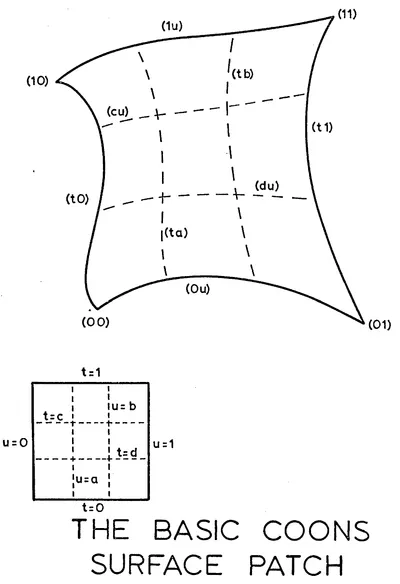
This article draws from primary historical sources to examine the origin of, and tensions between, two postwar era modeling techniques that shaped the early history of computer-aided design: the plex, developed by Douglas T. Ross, and the Coons patch, developed by Steven A. Coons. The article shows how each of these two techniques can be seen as emblematic of a fundamentally different understanding of design—one centered on information, and another on form—crucially foreshadowing present-day practices of computational design in architecture and other creative fields. Using them to illuminate the roots of ongoing technical and cultural trajectories of architectural modeling, and their frictions, the article shows how computer modeling techniques perform not just as tools but also as discursive devices, artifacts of persuasion, and instruments for disciplinary and intellectual demarcations.
More by these authors